
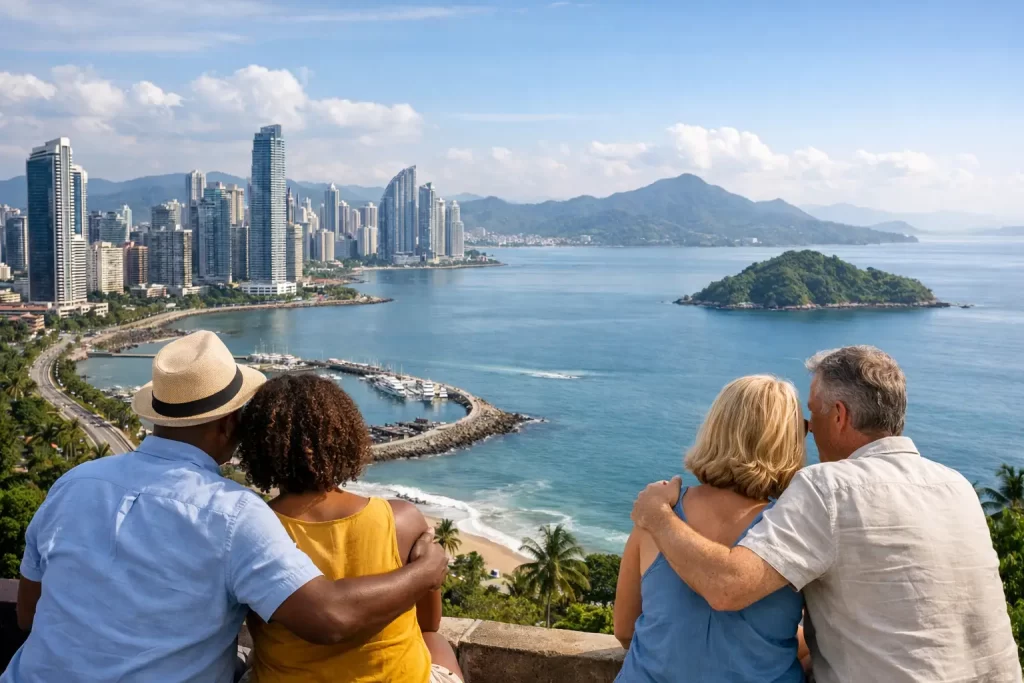
A retirement move tends to look simple from a distance. Then the real questions start. Which residency path actually fits your income? How will your pension be treated? Can you buy property safely, open a bank account, and access private healthcare without running into delays?
If you are researching how to retire in Panama, the smartest approach is not to start with beach photos or cost-of-living estimates. Start with structure. Panama can be an excellent retirement destination, but a smooth and worry-free transition usually depends on getting immigration, tax planning, banking, and real estate decisions aligned from the beginning.
Why Panama stays on retirees’ shortlists
Panama continues to attract US and international retirees for practical reasons. The country uses the US dollar alongside the balboa, which removes exchange-rate uncertainty for many Americans. It offers modern private healthcare, strong air connectivity, and a wide range of living environments, from Panama City high-rises to mountain towns and coastal communities.
It also appeals to retirees who want options. Some are looking for a lower day-to-day cost than major US metro areas. Others are focused on residency, estate planning, or the ability to spend part of the year abroad without giving up financial organization. Panama works well for many of these goals, but not in exactly the same way for every household.
That is why retirement planning here should be individualized. A single retiree with pension income, a couple with investment assets, and a family managing trusts or cross-border holdings may all choose Panama for different reasons and follow different legal and financial steps.
How to retire in Panama: start with residency
For most retirees, residency is the first major decision. Panama offers immigration pathways that may suit foreign nationals with pension income or broader financial means, but the right route depends on your profile, documents, timing, and long-term objectives.
The pension-based route is often the starting point in retirement conversations. It can be attractive for applicants with stable lifetime pension income that meets the legal threshold. That said, qualifying on paper and preparing a complete, workable application are not the same thing. Documentation standards matter, and errors in source documents, apostilles, translations, or filing strategy can create unnecessary delays.
Some retirees do not fit neatly into a pension-based category. They may have substantial assets, business income, or investment structures instead of traditional retirement payments. In those cases, another residency strategy may be more appropriate. The key is to avoid forcing your situation into the wrong category just because it seems familiar online.
A proper case review should look at your nationality, source of income, marital status, dependents, timing, and whether you may later need corporate, tax, or estate support in Panama. This is where integrated legal guidance becomes valuable.
Documents are often where plans slow down
The most common retirement delays are not dramatic legal problems. They are administrative ones. Certificates expire. Names do not match exactly across documents. Pension evidence is incomplete. Supporting records are issued in the wrong format for Panamanian authorities.
Retirees who plan ahead usually move faster because they gather and review documents before travel rather than trying to fix paperwork after arrival. That is especially important if you want your relocation schedule to line up with a lease, home purchase, or family move.
Choosing where to live in Panama
Retiring in Panama is not one decision. It is a series of smaller ones, and location is one of the biggest.
Panama City suits retirees who want proximity to major hospitals, specialists, private schools for younger dependents, full-service banks, and a broad range of restaurants and services. It can feel familiar to people coming from urban US markets, although traffic and pricing in premium neighborhoods should be part of the equation.
Mountain areas such as Boquete appeal to retirees who prioritize cooler weather, scenic surroundings, and an established international community. Coastal areas may offer a more relaxed lifestyle, but convenience can vary depending on distance from healthcare providers, airports, and administrative services.
The right choice depends on your actual routine, not an idealized version of retirement. If you expect regular specialist visits, frequent travel, or a high level of service access, a remote beachfront home may not be as practical as it first appears. On the other hand, if your priorities are climate, pace, and outdoor living, a city apartment may feel too limiting.
A short-term rental period before buying property is often a sensible move. It gives you time to understand commute times, neighborhood infrastructure, and seasonal patterns without committing too early.
Understanding the financial side of retirement in Panama
Cost is part of the appeal, but broad averages can be misleading. Panama can be affordable, moderate, or fairly expensive depending on where and how you live.
Imported goods, premium housing, private insurance, and frequent dining in high-end areas can narrow the savings gap compared with the US. At the same time, local services, domestic help, and some everyday expenses may be lower than what many retirees are used to paying back home.
Your retirement budget should include more than rent or mortgage payments. It should also account for residency processing, legal support, private healthcare, insurance, transportation, household staffing if needed, and travel back to the US or to visit family. If you are buying real estate, include closing costs, ownership structuring, maintenance, and due diligence.
This is also where cross-border tax planning matters. Many US retirees assume a move abroad changes everything from a tax perspective. Often, it does not. US citizens generally remain subject to US tax filing obligations even while living overseas. Panama’s own tax treatment, source-of-income rules, asset ownership structure, and reporting implications should be reviewed before major financial decisions are made.
Healthcare is a planning issue, not a detail
Private healthcare is one of Panama’s major strengths, particularly in and around Panama City. Many retirees are comfortable with the quality of care, and private facilities can offer efficient access to specialists and procedures.
Still, healthcare planning should be handled early. You need to know which hospitals and doctors are realistic options in your chosen area, whether private insurance is available and cost-effective at your age, and how you would manage routine care versus emergency events. If you take prescription medications, verify local availability and continuity.
For some retirees, the answer is a city-based lifestyle with healthcare close at hand. For others, it is living outside the city but keeping transportation and backup plans firmly in place. There is no single correct model, but there should be a model.
Banking, property, and legal coordination
Many retirees underestimate how connected these pieces are. Residency can affect banking. Banking can affect property transactions. Property ownership can have estate and tax implications. When these steps are handled separately, inefficiencies tend to show up.
Opening a bank account in Panama may involve detailed compliance checks and source-of-funds review. Buying real estate requires proper due diligence, title review, contractual protection, and attention to how the asset should be held. If you are moving meaningful wealth or planning inheritance structures, the legal framework should be considered before funds are transferred or purchase agreements are signed.
This is one reason many retirees prefer a single advisory team that can coordinate immigration, legal, tax, and property matters under one strategy. For clients making a permanent or semi-permanent move, that coordination often reduces friction more than any single paperwork shortcut.
Common mistakes when planning how to retire in Panama
The most expensive errors usually come from assumptions. One is assuming residency approval will be quick regardless of documentation quality. Another is assuming tax consequences can be reviewed later. A third is buying property before understanding local legal process, ownership structuring, or neighborhood practicality.
There is also the lifestyle mistake of choosing Panama based on someone else’s retirement model. One couple may thrive in a quiet mountain town. Another may find it isolating after three months. A retiree with simple pension income may have a straightforward path, while a high-net-worth family needs a much broader planning conversation.
Careful planning does not make the process complicated. It makes it clearer.
A practical way to move forward
If Panama is on your shortlist, begin with a professional assessment of your residency options, income structure, tax exposure, and ideal living setup. Then build the move in the right order: immigration strategy, document preparation, banking readiness, location review, and property or lease decisions. Firms such as Prime Solutions Tax & Legal are built around that kind of coordinated support because retirement relocation is rarely just an immigration matter.
Panama can offer retirees real advantages, but the best outcomes usually come from planning for the life you will actually live there, not the version sold in headlines.