
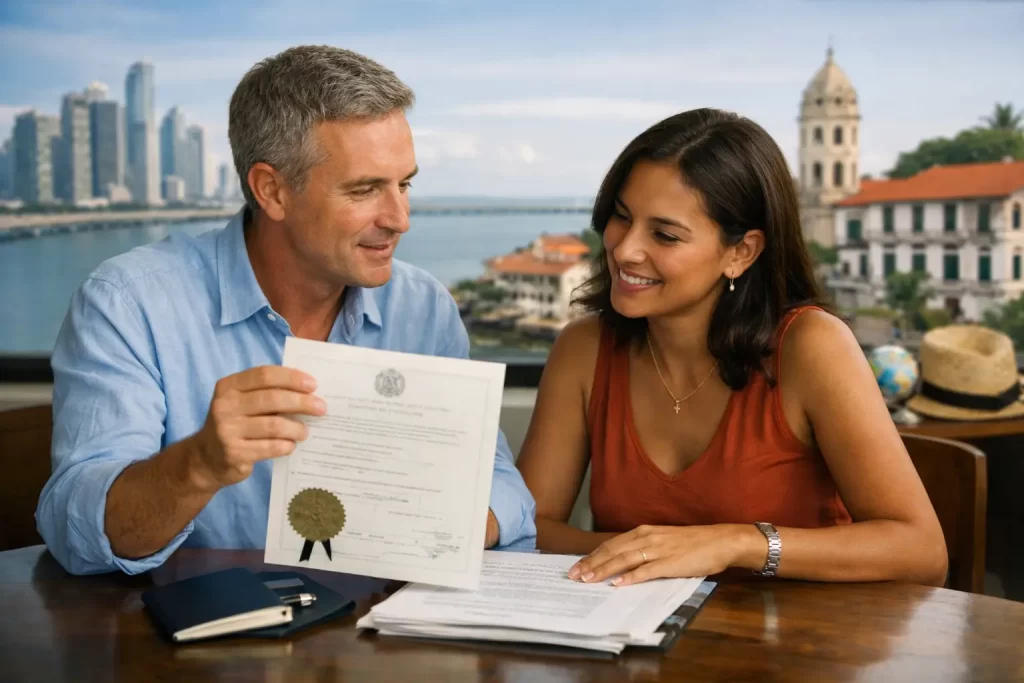
If your Panama immigration file is missing one apostille, the problem usually shows up late – after you’ve already ordered records, booked travel, or started counting on a filing date. That is why understanding apostille documents for Panama visa applications early can save time, money, and unnecessary stress.
For most residency and visa processes in Panama, foreign documents must be legalized so Panamanian authorities can recognize them as valid. In many cases, that means an apostille. The exact document list depends on the visa category, your nationality, and where each document was issued, but the underlying issue is consistent: if a required record is not properly apostilled, translated, current, or matched to the rest of the file, your application can be delayed or rejected for filing.
What apostille documents for Panama visa cases usually include
The term sounds simple, but it often causes confusion. An apostille is not the document itself. It is a certification attached to a public document so that another country that is part of the Hague Apostille Convention can accept it.
For a Panama visa or residency application, the most common apostilled documents are police clearance certificates, birth certificates, marriage certificates, and in some cases powers of attorney, pension letters, corporate records, or proof tied to economic solvency. Which ones apply depends on the immigration route you are pursuing. A retiree applying under a pension-based category will usually need a different supporting set than an investor, a dependent spouse, or an entrepreneur building a Panama structure.
This is where applicants often lose time. They assume one checklist fits everyone, when in practice immigration strategy determines document strategy.
Why apostilles matter in Panama immigration
Panamanian immigration authorities need to verify that a foreign-issued document is authentic. An apostille serves that purpose for member countries of the convention. Without it, a document that seems perfectly legitimate in the US may not be accepted in Panama.
There is also a timing issue. Many immigration documents have practical validity windows. Police records, for example, are often treated as time-sensitive. Even if a document is correctly apostilled, it may still create problems if it is too old by the time your file is prepared, translated, and submitted.
That is why experienced planning matters. The order in which you request records, apostilles, translations, and signatures can affect whether your package is usable when it reaches immigration.
Which documents are commonly required
Personal civil documents
Birth certificates and marriage certificates are commonly required when identity, family relationship, or dependent status must be proven. If your spouse or children are part of the application, these records usually become central to the case.
The detail that matters is consistency. Names, dates, prior surnames, and places of birth must align with passports and other supporting documents. A small discrepancy may be manageable, but it is better to identify it before apostilling and translating the record.
Police clearance records
For many applicants, this is the document that causes the most last-minute pressure. Police clearances often have short practical lifespans in immigration filing, and obtaining the apostille can add another layer of processing time.
US applicants should pay close attention to which police record is appropriate for their visa pathway and where it must be apostilled. State-issued and federal-issued records follow different channels. Choosing the wrong one can force you to start over.
Financial and eligibility documents
Some visa categories require proof of pension income, investment funds, employment relationship, or legal authority to act on behalf of a company. These documents may also need apostille treatment depending on their nature and issuing authority.
This is one of the more nuanced areas. Not every supporting paper is apostilled in the same way, and not every financial record qualifies as a public document. In some cases, notarization is part of the path. In others, a government-issued or officially certified version is needed before apostille is even possible.
Apostille versus consular legalization
Most applicants from the US and many other countries will deal with apostilles, not consular legalization. But the distinction matters. If a document comes from a country outside the Hague Apostille Convention, Panama may require a different legalization route.
That is why nationality alone is not the only factor. You may be a US citizen with a document issued in another country, or a foreign national with civil records from several jurisdictions. Each document may need to be evaluated on its own origin and legal path.
For international families and cross-border investors, this can turn a simple filing into a multi-country coordination exercise.
Common mistakes that delay a Panama visa application
The most common mistake is ordering the right document in the wrong format. Another is getting a notarized copy when the process actually requires an original certified public record. Applicants also run into issues when they apostille a document too early, then discover it expires for practical filing purposes before the rest of the package is ready.
Translation errors are another avoidable problem. Documents submitted in Panama often require official Spanish translation after the apostille process is complete. If a document is translated before final legalization, you may end up paying twice.
Name mismatches are more common than many people expect. A passport may show a full middle name while a birth certificate shows an initial, or a married name may appear in one place but not another. These issues do not always defeat an application, but they should be identified and explained before filing, not after immigration raises questions.
How to prepare apostille documents for Panama visa filing
Start with the visa category, not the document shopping list. Once you know the immigration route, you can identify which records are actually required, where they must be obtained, and whether they need apostille, notarization, translation, or all three.
Then build backward from your intended filing date. This is especially useful for police clearances and other time-sensitive records. If you collect everything too early, some items may become stale. If you wait too long, apostille processing can push back your filing window.
It also helps to review every record for internal consistency before sending it for apostille. Check spelling, passport numbers where relevant, marital status, and issue dates. Correcting a document after apostille usually means repeating the process.
For clients managing relocation, entity setup, tax planning, and residency at the same time, coordination matters even more. A document used for immigration may also affect banking, property acquisition, dependent applications, or corporate authority paperwork. Handling these steps through one coordinated plan is often faster than solving each issue separately.
What US applicants should expect
For US-based applicants, the practical challenge is that apostilles are not issued by one universal office for every document. The issuing authority depends on the type of record. State vital records generally follow one path, while federal documents follow another.
Processing times also vary widely. Some offices move quickly. Others do not. If your immigration strategy depends on a narrow filing window, that variability needs to be accounted for early.
This is also why generic online checklists can be misleading. They may describe a document in broad terms without explaining which issuing version Panama will accept or how the apostille must be obtained. A document that looks close enough is not always good enough for immigration filing.
When professional guidance makes a difference
If your case is straightforward, document preparation may be manageable with a clear plan. But many Panama residency matters are not purely administrative. They involve family structure, multiple nationalities, foreign corporate holdings, pension qualification, or tax and legal planning that should align from the beginning.
That is where a concierge-style legal and immigration approach adds value. Instead of treating apostilles as a standalone errand, the process is handled as part of a broader filing strategy. Prime Solutions Tax & Legal often works with clients at exactly this stage, when they want their Panama move or investment structure to be orderly, compliant, and worry-free rather than reactive.
Apostilles are a small part of the file on paper, but they often determine whether the larger plan moves forward on schedule. If you treat document preparation as a strategic first step instead of paperwork at the end, the rest of your Panama process tends to go much more smoothly.