
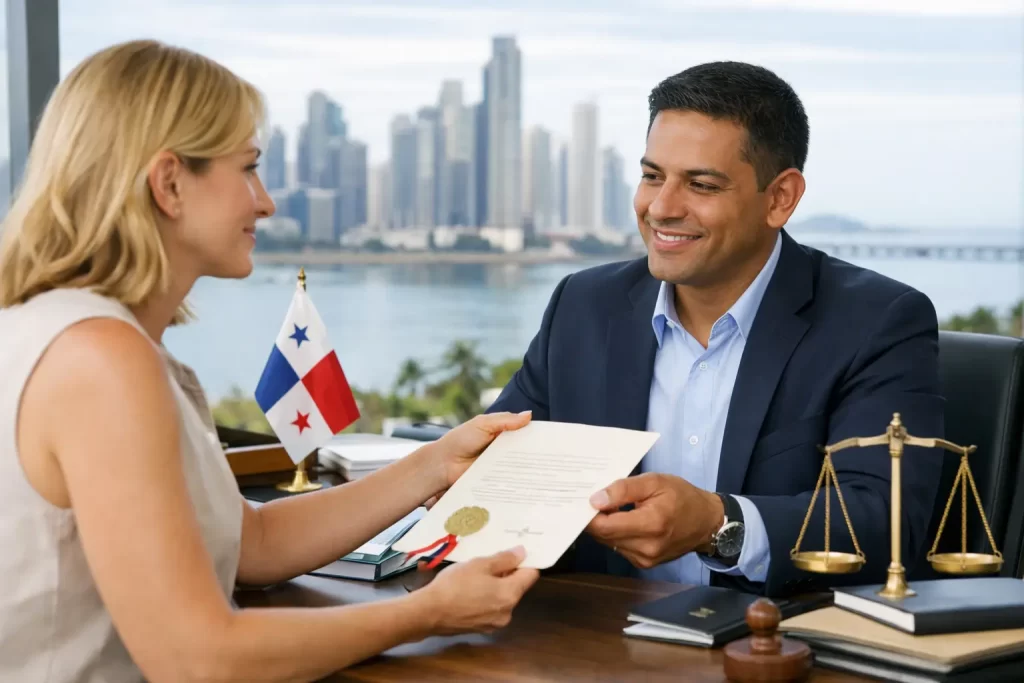
If your residency file is ready but one birth certificate, marriage certificate, or corporate record is still missing proper authentication, everything can stall. For many foreign nationals and international businesses, understanding how to apostille documents Panama is less about paperwork and more about keeping a move, investment, or legal process on schedule.
The good news is that the apostille process is usually straightforward once you know which country issued the document, which authority must certify it, and whether Panama will accept it as submitted or require translation. The less convenient truth is that mistakes are common, especially when people apostille the wrong version of a document, use an unofficial copy, or assume every document follows the same route.
What an apostille means in Panama
An apostille is a certificate issued under the Hague Apostille Convention that confirms the authenticity of a public document for use in another member country. Panama recognizes apostilles from other Hague Convention countries, which means a properly apostilled foreign document can usually be presented in Panama without going through the longer chain legalization process.
That matters for immigration, real estate, banking, inheritance matters, corporate filings, and tax-related procedures. If you are applying for residency in Panama, opening a structure for investment, or documenting a family relationship, the apostille is often the bridge between a valid document in your home country and a usable document in Panama.
How to apostille documents Panama: start with the issuing country
The first point that causes confusion is this: Panama does not apostille foreign documents that were issued outside Panama. The apostille must generally be obtained in the country where the document originated.
So if your FBI background check was issued in the United States, the apostille must be obtained through the competent US authority. If your birth certificate was issued in Spain, the apostille must be issued in Spain. If your corporate document was created in Panama for use abroad, then the Panamanian apostille process applies.
This distinction is critical because many clients ask how to apostille documents Panama when what they really need is to prepare foreign documents for use in Panama. The answer depends first on where the document was issued and whether that country is part of the Hague system.
If your document was issued outside Panama
You normally need to request a recent official copy from the original issuing authority, then have that copy apostilled by the designated authority in that country. In many cases, Panama will also require a Spanish translation by an authorized translator after the document arrives.
Examples include police clearances, vital records, court records, powers of attorney, and corporate certificates. Each category may have its own validity period, and that timing matters. A document that is correctly apostilled but already expired for immigration or banking purposes may still be rejected.
If your document was issued in Panama
If the document is Panamanian and will be used abroad, the apostille is processed in Panama through the appropriate authority after confirming the underlying signature is eligible for apostille. This often applies to corporate documents, notarized powers of attorney, civil registry certificates, and certain court or administrative records.
Whether the document can be apostilled immediately depends on who signed it, whether notarization is required first, and whether the receiving country accepts apostilles.
The documents most often apostilled for Panama use
For individuals, the most common documents are birth certificates, marriage certificates, divorce decrees, death certificates, police or criminal background checks, proof of pension or income, and powers of attorney. For businesses and investors, common documents include certificates of incorporation, good standing certificates, board resolutions, shareholder documents, and notarized corporate authorizations.
Not every document should be handled the same way. A state-issued birth certificate may need a state-level apostille, while a federal background check may require a federal apostille. A signed letter from a private institution may need notarization before it becomes eligible. That is where people often lose time.
Step-by-step process to prepare documents for Panama
The most practical way to approach this is to work backward from the Panamanian procedure you are trying to complete. Start by confirming exactly which documents are required, how recent they must be, and whether originals are necessary.
Next, obtain the correct version of each document. This sounds basic, but it is one of the biggest failure points. A scanned copy, hospital-issued birth record, or informal corporate extract is rarely enough. The apostille authority usually requires an official document bearing the recognized signature or seal.
Then verify which authority issues the apostille in the country of origin. In the US, for example, that may be a Secretary of State for state records or the US Department of State for certain federal documents. The route changes based on the document type.
After the apostille is issued, review whether the document needs translation into Spanish for use in Panama. In many legal and immigration settings, foreign-language documents must be translated by a Panamanian authorized public translator or through a translation that meets local acceptance standards.
Finally, check timing before submission. Background checks and civil documents may be accepted only within a limited window from issuance or apostille date, depending on the authority handling your case.
Common mistakes that delay approvals
The most expensive apostille problems are not usually legal problems. They are process problems.
One common issue is apostilling a notarized photocopy instead of the actual official record. Another is requesting an apostille for a document that is too old for the intended Panamanian filing. People also overlook name mismatches. If the passport name, birth certificate name, and marriage certificate name do not align clearly, the apostille itself will not fix that inconsistency.
Translation is another frequent problem. A document may be perfectly valid in its home country and properly apostilled, but still unusable in Panama until translated in the correct format. There is also the opposite problem: translating first and apostilling later, when the receiving authority actually needs the original public document apostilled before translation.
For corporate clients, the issue is often chain of authority. A board resolution may be valid internally but not suitable for foreign use unless it is notarized, certified, and then apostilled through the proper channel.
How long it takes
There is no single timeline because apostilles depend on the country, the authority, and the document type. Some are issued within days. Others take several weeks, especially if the record must first be reissued, corrected, or routed through a federal office.
That is why apostille planning should start early if you are pursuing Panamanian residency, opening a bank relationship, buying property, or forming a structure tied to an investment deadline. Waiting until the final stage often creates avoidable pressure.
When an apostille is not enough
An apostille confirms authenticity. It does not confirm that the content satisfies Panamanian legal requirements.
For example, a criminal background check may be properly apostilled yet still fail to meet residency filing standards if it is outdated or incomplete. A corporate document may be apostilled but still require additional drafting to comply with the requested transaction or due diligence review. A power of attorney may be apostilled and translated, but if the scope of authority is too narrow, it may still be rejected for the intended act.
This is where coordinated legal review matters. If the apostille process is treated as a stand-alone admin task, you can end up with formally authenticated documents that are still not fit for purpose in Panama.
Why professional coordination helps
For straightforward personal matters, some people handle the apostille process on their own without difficulty. But once the matter involves residency timing, multiple jurisdictions, corporate ownership, tax-sensitive planning, or family records from different countries, the margin for error gets smaller.
A coordinated advisory team can confirm which documents are actually needed, whether apostille or legalization applies, when translation should happen, and how the documents fit into the larger immigration, corporate, or asset-planning strategy. For clients relocating or investing in Panama, that often saves more time than the apostille itself.
At Prime Solutions Tax & Legal, this kind of coordination is often what keeps a filing from becoming fragmented across immigration, corporate, and compliance steps.
If you are preparing documents for Panama, the best approach is simple: verify the end use first, apostille the correct version in the country of origin, and do not assume that authentication alone makes the document ready. A little precision at the start usually prevents a much bigger delay later.