
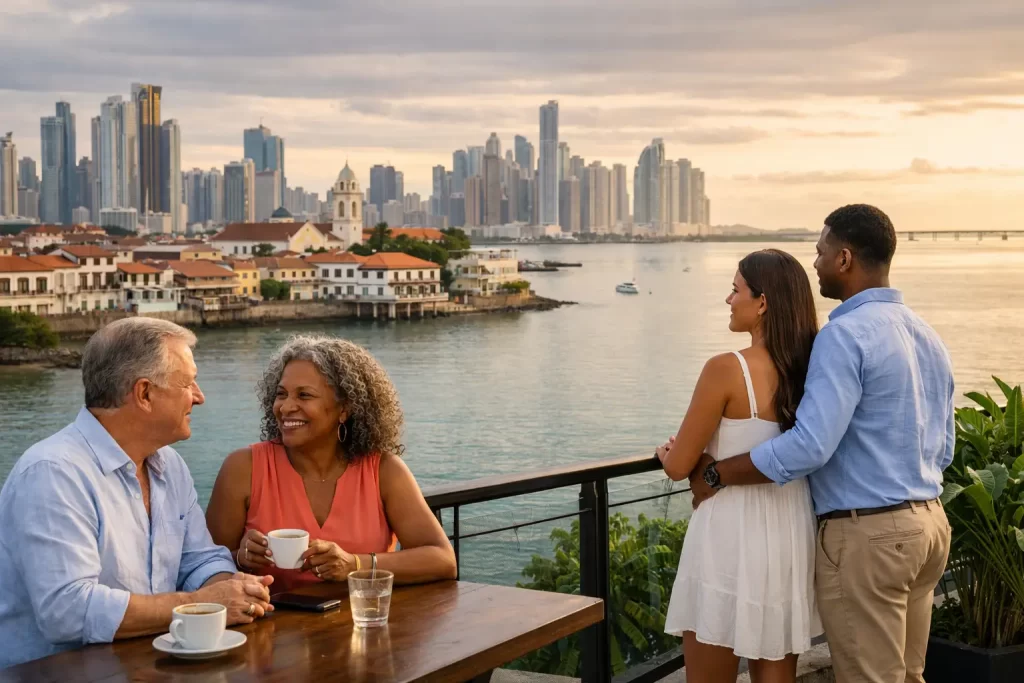
A buyer looking at Panama in 2026 is not entering a blank slate. They are walking into a market shaped by migration, infrastructure spending, tourism recovery, selective foreign demand, and a more disciplined lending environment. That is what makes the panama real estate market outlook worth studying carefully – not because every segment is moving in the same direction, but because they are not.
For retirees, investors, and business owners considering Panama, the key question is no longer whether opportunities exist. They do. The more useful question is where demand is holding, where pricing still has room, and where legal, tax, and operational details can change the quality of the investment.
Panama real estate market outlook: what is driving demand?
Panama continues to benefit from a combination that few regional markets can match. It offers territorial taxation, established residency pathways, strong international connectivity, dollarized economic stability, and a location that works for both lifestyle buyers and cross-border business operators. Those fundamentals still matter, especially for US and international clients comparing Panama with Costa Rica, Mexico, Portugal, or parts of the Caribbean.
That said, demand is no longer broad-based in the way it was during earlier expansion cycles. Buyers are more selective. They want clear title, realistic carrying costs, quality construction, and locations with proven resale or rental demand. This has pushed the market toward better-performing micro-markets rather than across-the-board appreciation.
A second driver is demographic. Panama remains attractive to retirees and semi-retired professionals who want a lower cost base without giving up air access, healthcare options, or urban services. At the same time, entrepreneurs and internationally mobile families continue to explore Panama as a residence and business jurisdiction. These groups often buy for mixed use – part lifestyle, part long-term asset positioning.
Pricing is stable in some areas, pressured in others
One of the most important points in any panama real estate market outlook is that headline pricing can be misleading. Panama City luxury inventory does not behave like suburban family housing. Beachfront condos do not behave like mountain homes in Boquete. Pre-construction units do not behave like existing, income-producing apartments.
In prime sections of Panama City, especially neighborhoods with strong amenities, multinational presence, and established expat interest, pricing has generally become more rational after years of uneven absorption. In practical terms, this means serious buyers can still find value, but sellers of well-located, well-maintained properties are not under pressure to discount heavily unless there is oversupply in the building or the property is priced for a different market cycle.
Outside the capital, the story varies. Lifestyle markets such as Boquete, Coronado, and select beach communities continue to attract retirees and second-home buyers, but demand can be highly seasonal and more sensitive to property management quality, infrastructure, and access to services. In these areas, attractive homes can move well if they are turnkey and sensibly priced. Properties requiring major updates or carrying unrealistic expectations often sit much longer.
Panama City remains the most liquid market
For investors focused on liquidity, Panama City still deserves attention. It is the deepest market in the country, with demand linked not only to foreign buyers but also to local professionals, regional executives, and companies needing housing solutions for staff. That does not remove risk, but it does create more exit options.
Neighborhood selection matters more than broad city exposure. Areas with consistent appeal tend to be those close to business districts, hospitals, international schools, and retail services. Buildings with strong administration, predictable maintenance budgets, and modern amenities are generally easier to lease and resell.
Older inventory can offer attractive price-per-square-foot value, but it needs a sharper lens. In many cases, buyers must assess renovation costs, HOA history, reserve planning, elevator condition, and any pending structural or legal issues within the building. A low acquisition price can stop being a bargain very quickly.
Lifestyle markets still attract foreign buyers
Panama’s lifestyle markets continue to appeal to US and Canadian retirees, remote business owners, and buyers seeking diversification outside their home country. Boquete remains one of the best-known mountain destinations because of climate, community, and services. Beach areas near Coronado continue to benefit from relative accessibility from Panama City. Bocas del Toro attracts buyers with a higher risk tolerance who are drawn to tourism and vacation rental potential.
The trade-off is straightforward. These markets can offer strong lifestyle value and, in some cases, compelling rental upside, but liquidity is usually lower than in Panama City. Resale timelines can be longer, buyer pools are narrower, and due diligence on utilities, zoning, water access, and property management becomes even more important.
For clients buying primarily for personal use, that may be perfectly acceptable. For clients who want a clean exit strategy within three to five years, it calls for more discipline.
Rental performance depends on property type
Rental yield discussions in Panama often become too general. A furnished one-bedroom in a well-located city tower serves a different market than a large beachfront unit or a mountain villa. Short-term rental demand also depends heavily on local rules, building policies, and operating capability.
In Panama City, long-term rentals tend to offer more predictable occupancy when the unit is correctly positioned on price, location, and furnishing. Executive rentals, compact units near business corridors, and apartments suited for new residents or relocating professionals often have the broadest demand. Larger luxury units can lease well, but the tenant pool is smaller and vacancy periods can stretch.
In resort and lifestyle areas, gross rental income can look attractive on paper, especially in peak travel periods. Net performance is another matter. Owners need to factor in management fees, marketing costs, maintenance, seasonality, and the reality that a beautiful property without consistent oversight can become a liability. Investors considering short-term rental plays should underwrite conservatively.
Financing, regulation, and legal detail matter more than ever
Foreign buyers are often drawn to Panama for opportunity, but the operational side of a real estate purchase deserves equal weight. Financing is available in some cases, though terms for foreigners are not always as favorable or straightforward as domestic buyers expect. Many transactions remain cash-driven, which can strengthen negotiating power but also puts pressure on getting legal review right from the start.
Title verification, seller authority, tax exposure, corporate ownership structure, zoning limitations, and municipal compliance all need review before funds are committed. This is especially true when a property is held through a corporation, sits within a mixed-use development, or is being marketed with projected rental returns.
For international buyers, there is also a broader planning question: how does the property fit into residency goals, inheritance planning, reporting obligations, and tax treatment in the buyer’s home country? The purchase itself is only one part of the decision. Firms like Prime Solutions Tax & Legal are often brought in precisely because buyers want those moving pieces handled in a coordinated way rather than as separate problems.
Where the best opportunities may be in 2026
The strongest opportunities are likely to be selective rather than speculative. In todays market, that usually means quality existing properties in proven locations, assets with realistic rental demand, and purchases where legal and operational costs are fully understood upfront.
In Panama City, this can mean well-run buildings in established districts where oversupply has already been absorbed or repriced. In lifestyle markets, it can mean turnkey homes that match current foreign buyer preferences rather than custom properties built for a narrow audience. There may also be opportunity in underperforming assets that need repositioning, but only for buyers with local support and a clear budget.
Caution is warranted around projects sold mainly on future promises, unusually high yield claims, or prices that assume rapid appreciation without a clear demand driver. Panama offers real advantages, but it is still a market where execution matters.
What buyers should watch over the next 12 months
The next phase of the market will likely be influenced by interest rates, migration flows, tourism strength, infrastructure delivery, and confidence among foreign buyers. If global financing conditions ease, transactional activity could improve. If residency-driven demand remains steady, lifestyle and urban mid-market segments should continue to benefit.
At the same time, buyers should watch for local factors that matter at the property level: how quickly comparable units are actually selling, whether rental rates are holding after vacancy, and whether building-level costs are rising faster than expected. These details often tell more truth than broad market optimism.
For most international clients, the best approach is not to chase the market. It is to define the objective first. A retirement home, an income property, a future relocation base, and a capital preservation asset may all be real estate in Panama, but they should not be evaluated the same way.
Panama still offers a compelling combination of lifestyle, strategic location, and cross-border planning advantages. The buyers who do best here are usually the ones who move with clarity, verify every detail, and choose properties that fit their real goals rather than someone elses sales narrative.