
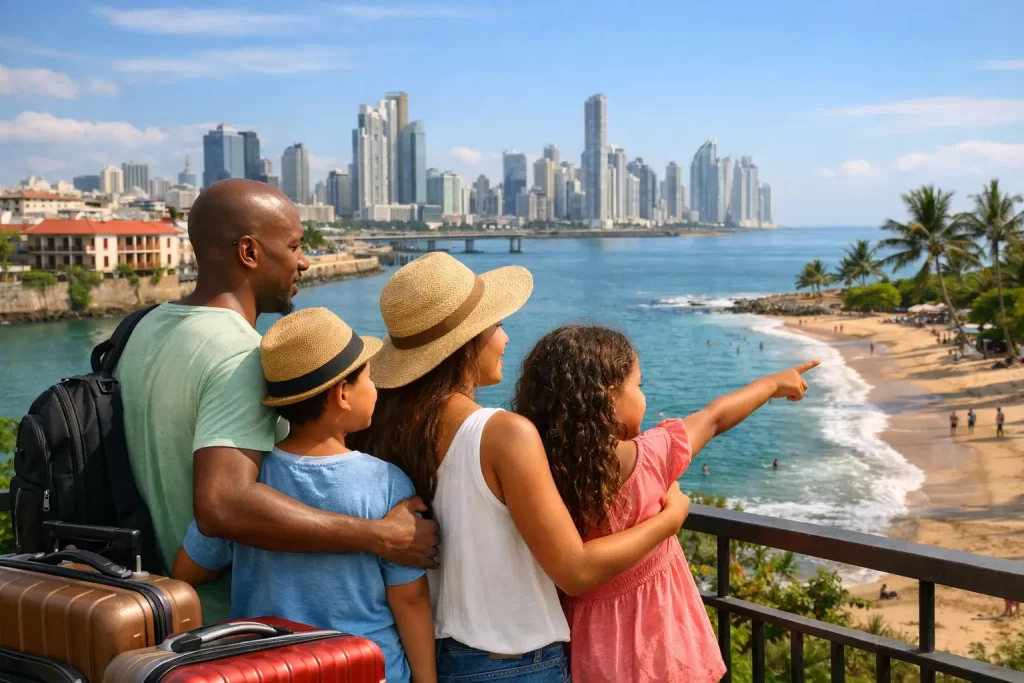
Moving a family is never just about flights and packing. If you plan to relocate family to Panama, the real work starts with decisions that affect residency status, school enrollment, healthcare access, housing contracts, and tax exposure in more than one country.
For many families, Panama stands out for practical reasons. It offers geographic convenience, a dollarized economy, strong international connectivity, established private healthcare, and several residency pathways that can support long-term planning. But a successful move depends on getting the sequence right. Families that treat relocation as both a legal and lifestyle project usually make better choices and avoid expensive corrections later.
Why families relocate to Panama
Panama appeals to families for different reasons, and those reasons shape the relocation strategy. Some are leaving high-cost cities and want more day-to-day breathing room. Others are motivated by retirement planning, business expansion, asset protection, or proximity to Latin America while staying connected to the US.
The practical advantage is that Panama can support more than one objective at the same time. A parent may be seeking residency, a more favorable operating base for international business, and access to quality private schools for children. That makes Panama attractive, but it also means the move should be coordinated across immigration, tax, legal, and financial considerations rather than handled as separate tasks.
Relocate family to Panama with the right legal path
The first major decision is your immigration strategy. Not every residency option fits every family, and the best route often depends on nationality, income source, investment plans, and timing.
Some families qualify through investor-based pathways, while others may explore options tied to pension income or other legal grounds for residence. What matters is confirming not only that the principal applicant qualifies, but also that dependents can be included properly and that documentation for a spouse and children is prepared in the correct format.
This is where delays often begin. Birth certificates, marriage certificates, police records, passports, and supporting financial documents may all need authentication, translation, and careful review. If one item is outdated or inconsistent with another, the application can slow down significantly. Families with children should start document collection early because school admissions, residency filing, and health insurance applications may all depend on overlapping records.
A sound legal plan also looks beyond the approval itself. You want to know how long status lasts, what renewal obligations apply, whether travel affects it, and what options exist for permanent residence or future citizenship. Those details matter more when you are relocating a household, not just testing a temporary stay.
Housing decisions affect more than comfort
Families often ask whether they should rent first or buy immediately. In most cases, renting first is the more prudent move, especially if you are still learning neighborhood patterns, commute times, school access, and how your family actually uses the city.
Panama offers a range of living environments. Some families prefer urban convenience in Panama City, where international schools, hospitals, and business services are concentrated. Others want beach or mountain communities with a quieter pace. The trade-off is usually between access and lifestyle. A neighborhood that feels ideal for weekends may not be ideal for weekday school runs or meetings.
Lease review is also more important than many newcomers expect. Terms related to deposits, maintenance, furnished inventory, early termination, and utilities should be understood before signing. If a relocation is tied to residency timing, the lease may also become part of your address evidence and local setup, so accuracy matters.
Schools and family routines should be planned early
For parents, schooling is often the factor that determines whether the move feels stable. Panama has private school options that appeal to international families, including bilingual and international curricula, but availability, admissions timing, and grade placement vary.
Do not assume a school with a good reputation is automatically the right fit. Language environment, transportation time, extracurricular structure, and academic transition support all matter. A child coming from a US system may adapt differently depending on age and prior language exposure.
Families should begin conversations with schools well before arrival if possible. Ask about admissions requirements, waitlists, school calendars, and whether records from your current school need notarization or translation. If your children are younger, also consider how the school location fits with where you intend to live. A strong school can become a weak choice if the daily logistics create constant strain.
Healthcare, insurance, and everyday setup
One reason many families feel comfortable in Panama is the availability of private healthcare. Still, access is not the same thing as readiness. Before moving, it is wise to review how your current insurance works abroad and whether local or international coverage is a better fit.
Families with ongoing medical needs should map this out in advance. Prescription continuity, specialist access, pediatric care, and emergency coverage are all worth confirming before arrival. The same goes for practical setup items that affect daily life quickly, such as banking, mobile service, transportation, and household staffing if needed.
These may sound secondary compared with residency, but they shape whether the first months feel manageable or chaotic. A smooth and worry-free transition usually depends on handling both the formal legal steps and the mundane local details at the same time.
Tax planning matters before you move, not after
This is the area many families underestimate. Relocation does not automatically change tax obligations in your home country, and moving to Panama can create a new layer of reporting, structuring, and planning questions.
US citizens and certain other taxpayers may still have filing obligations regardless of residence. Families with investment income, business entities, trusts, retirement distributions, or cross-border assets should evaluate their tax position before the move is finalized. The right structure for residency may not be the right structure for taxes, and vice versa.
A family relocating because one spouse owns a business, for example, may need to review where income is sourced, how an overseas company is treated, whether local registrations are required, and how compensation should be paid. A retired couple may instead focus on pension treatment, investment income, estate planning, and account reporting.
This is where integrated advice becomes valuable. If immigration, corporate, and tax steps are taken in isolation, one good decision can create problems somewhere else. Coordinated planning helps reduce that risk.
If you own a business, build the business plan into the move
Some clients relocate family to Panama not only for personal reasons but because Panama also works as a regional business hub. If that is part of your plan, the family move and the business setup should be designed together.
That may include entity formation, corporate governance, accounting obligations, payroll considerations, commercial licensing, office or coworking arrangements, and banking preparation. It may also affect which family member applies as the principal resident and how income or ownership is documented.
There is no single best structure for every entrepreneur or investor. The right answer depends on where clients are located, where revenue is earned, and how much operational substance you need in Panama. Families who think through this early usually avoid having to restructure shortly after arrival.
What a realistic relocation timeline looks like
A family move to Panama rarely feels linear, even when well planned. Documentation can take longer than expected. School calendars may not align with visa timing. Housing choices often change after an initial visit.
In practice, it helps to think in phases. The first phase is strategy: choose the residency route, define family goals, and identify tax and legal issues. The second phase is document and application preparation. The third phase is local implementation, including housing, school placement, banking, healthcare, and business support where relevant.
Some families can move quickly. Others benefit from a staged approach in which one spouse arrives first, or the family rents short term before making longer commitments. That is not a sign of uncertainty. It is often the more controlled way to relocate when children, assets, and cross-border reporting obligations are involved.
The common mistakes to avoid
The biggest mistake is assuming Panama is simple because it is attractive. Families can successfully relocate to Panama, but they must navigate legal requirements, procedures, and long-term decisions.
Another common issue is focusing only on residency approval while leaving tax, estate, and business questions until later. Families often struggle when they choose properties or schools before understanding neighborhoods and daily routines.
Perhaps the most expensive mistake is using too many disconnected providers. When immigration counsel, accountants, real estate contacts, and corporate advisors are not aligned, families often receive fragmented guidance. Prime Solutions Tax & Legal helps reduce friction by coordinating each part of your move with a Panama-focused approach.
A family relocation should not feel like a series of guesses. With the right planning, Panama can offer not just a new address, but a more intentional way to live, invest, and build for the years ahead.