
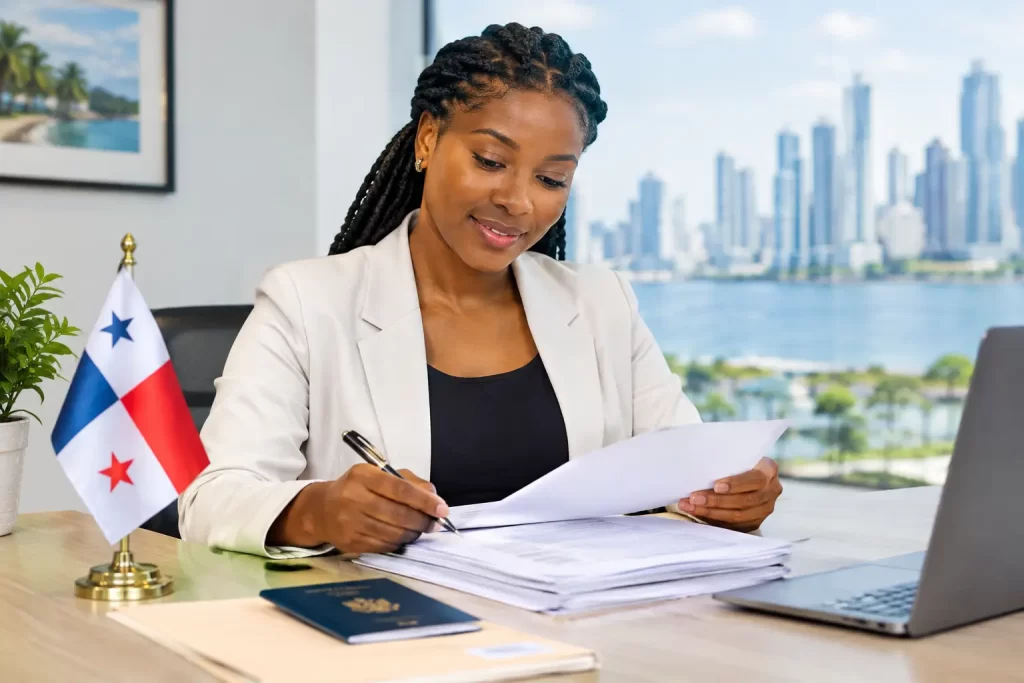
A missing stamp, an untranslated apostille, or a translation prepared by the wrong professional can delay an otherwise strong residency filing. When you certify translations for Panama visas, the goal is not simply to turn English documents into Spanish. It is to prepare a document package that Panama’s immigration authorities can accept without questions about authenticity, completeness, or legal form.
For US citizens and other foreign applicants, translation requirements are often one of the last details addressed before filing. That is understandable, but it can create avoidable pressure. The right sequence – obtaining the correct original, legalizing it where required, and arranging an acceptable Spanish translation – protects your visa timeline and helps your relocation move forward with fewer surprises.
Why certified translations matter for Panama visas
Panama’s immigration process is conducted in Spanish. Supporting records issued abroad, including birth certificates, marriage certificates, police clearances, bank letters, pension evidence, corporate documents, and powers of attorney, may need an official Spanish translation before they can be submitted.
A certified translation is different from an informal translation or a document translated by a bilingual friend, employee, or online tool. For immigration purposes, the translation must be prepared in a format acceptable to the Panamanian authority handling the application. In many cases, that means a translation completed and certified by a Panama-authorized public translator.
The translator’s certification gives the Spanish version legal standing for the filing. It should accurately reproduce the source document, including signatures, seals, annotations, and relevant stamps. If an apostille appears on the document, the treatment of that apostille should also be considered. Immigration officials need to see the complete chain that supports the document’s validity.
Translation is one part of document preparation, not a substitute for legalization. A document can be translated perfectly and still be rejected if it needed an apostille or consular legalization and did not receive one.
The proper order to certify translations for Panama visas
The order of preparation matters. Starting with translation before confirming the document’s issuance and legalization requirements may result in duplicate work.
Start with the right source document
First, confirm the exact document required for your residency category and whether Panama will expect an original, a certified copy, or a recently issued record. A police clearance, for example, often has a limited period of validity. A marriage certificate may be acceptable when older, but it still must be a valid official record.
Names, dates, and identifying details should be consistent across the package. If a passport uses a middle name that does not appear on a birth certificate, or if a married surname differs from the name on an academic or financial record, address the discrepancy early. Translation will not resolve a name inconsistency.
Obtain apostilles or legalization before translation
For documents issued in countries that participate in the Hague Apostille Convention, an apostille is generally the method used to authenticate the public document for use abroad. The apostille verifies the official signature or seal on the underlying document. It does not verify the truth of the document’s contents.
Countries outside the convention may require a more involved consular legalization process. The appropriate path depends on the country that issued the document, not the applicant’s nationality or current residence.
As a practical rule, obtain the apostille or legalization before requesting the Spanish translation. The translator can then work from the complete document package, including the authentication page. This reduces the risk of submitting a translated certificate while leaving its apostille untranslated or disconnected from the record it authenticates.
Use a translator accepted for Panamanian filings
Not every certified translator is authorized to prepare translations for use before Panamanian authorities. A translation certified in the United States may be useful for other purposes, but it may not meet the standard expected for a Panama immigration filing.
For that reason, applicants commonly use a public translator authorized in Panama. The translator should receive clean, complete scans of every page, including blank pages where they form part of an official certificate, seals, apostilles, and handwritten notes. Cropped scans are a frequent source of confusion because a missing stamp or reference number can affect the certification.
Your legal team should confirm whether a translation is required for each document. Some records may be accepted in their original language in limited circumstances, while others should be translated as a matter of filing practice. The answer depends on the visa category, the issuing country, the document itself, and the immigration authority’s current procedures.
Review the completed package before submission
Before filing, compare the source document and the translation line by line for the items that matter most: names, passport numbers, dates, addresses, financial figures, corporate registration numbers, and the issuing authority’s details.
This review is especially valuable for documents with terms that do not translate neatly between legal systems. A US “notary public,” for example, does not have the same legal role as a Panamanian notary. Likewise, references to trusts, LLCs, retirement benefits, or state-level certificates may require precise wording so the Spanish translation reflects the document without overstating its legal effect.
Documents that commonly require translation
The documents required vary by residency route, but foreign-issued civil, financial, criminal-record, and corporate documents regularly need attention. This can include birth and marriage certificates, divorce decrees, FBI or state police clearances, pension letters, bank statements or bank reference letters, proof of investment, corporate formation records, and powers of attorney.
A dependent application often creates additional translation work because it introduces civil-status documents that are not needed for the principal applicant. Investors and business owners may also need to translate company records or evidence connected to the source and structure of an investment.
Do not assume that one translation can serve every purpose indefinitely. If a document expires, is reissued, or receives a new apostille, the related translation may need to be updated as well.
Common mistakes that create delays
The most common problem is treating an apostille as an afterthought. An applicant may translate a birth certificate, then obtain an apostille later, leaving the legalization page outside the translated package. Another frequent issue is using an unofficial translation because it is faster or less expensive, only to have the filing paused for a compliant version.
Timing is another concern. Police clearances and certain financial records can become stale while applicants wait for apostilles, translations, or appointments. Ordering every document at once may sound efficient, but it is not always the right strategy. Documents with short validity periods should be scheduled closer to the anticipated filing date, while long-term civil records can often be prepared earlier.
Applicants should also avoid editing, annotating, or combining source documents on their own. A translator needs a faithful copy of the actual record. If explanatory information is needed, it is usually better handled through an accompanying legal explanation than through changes to the document itself.
When the process requires additional planning
Some cases require more than standard document translation. If a record is issued in a language other than English or Spanish, the preparation path may require careful review. The same is true where a document includes multiple jurisdictions, such as a marriage certificate issued in one country, an apostille issued by another authority, and a supporting affidavit signed elsewhere.
Corporate and wealth-planning documents also deserve added scrutiny. Trust instruments, shareholder resolutions, beneficial ownership records, and foreign tax documentation can be lengthy and highly technical. Translating every page may be necessary in some situations, while a focused document strategy may be appropriate in others. The decision should be based on what immigration authorities need to assess, not simply on the document’s page count.
For families, consistency across documents is often more valuable than speed. A small difference in a child’s surname, a missing second last name, or an incorrectly translated place of birth can lead to follow-up questions that affect the entire family’s filing.
Build translation into your residency timeline
A well-managed Panama visa application treats translation as a coordinated legal step, not an administrative errand. Begin by identifying the documents required for your chosen residency category, then confirm which records need apostilles or legalization, when each record should be issued, and which translations must be completed by an authorized professional in Panama.
This coordination is particularly helpful when residency planning is tied to a property purchase, a business launch, retirement income, or a family relocation date. Prime Solutions Tax & Legal can align document preparation with the broader immigration, corporate, tax, and relocation considerations that often move alongside a Panama residency application.
Before you request translations, have the full document sequence reviewed. A few minutes of planning at the start can prevent repeat translations, expired records, and unnecessary delays when you are ready to file.